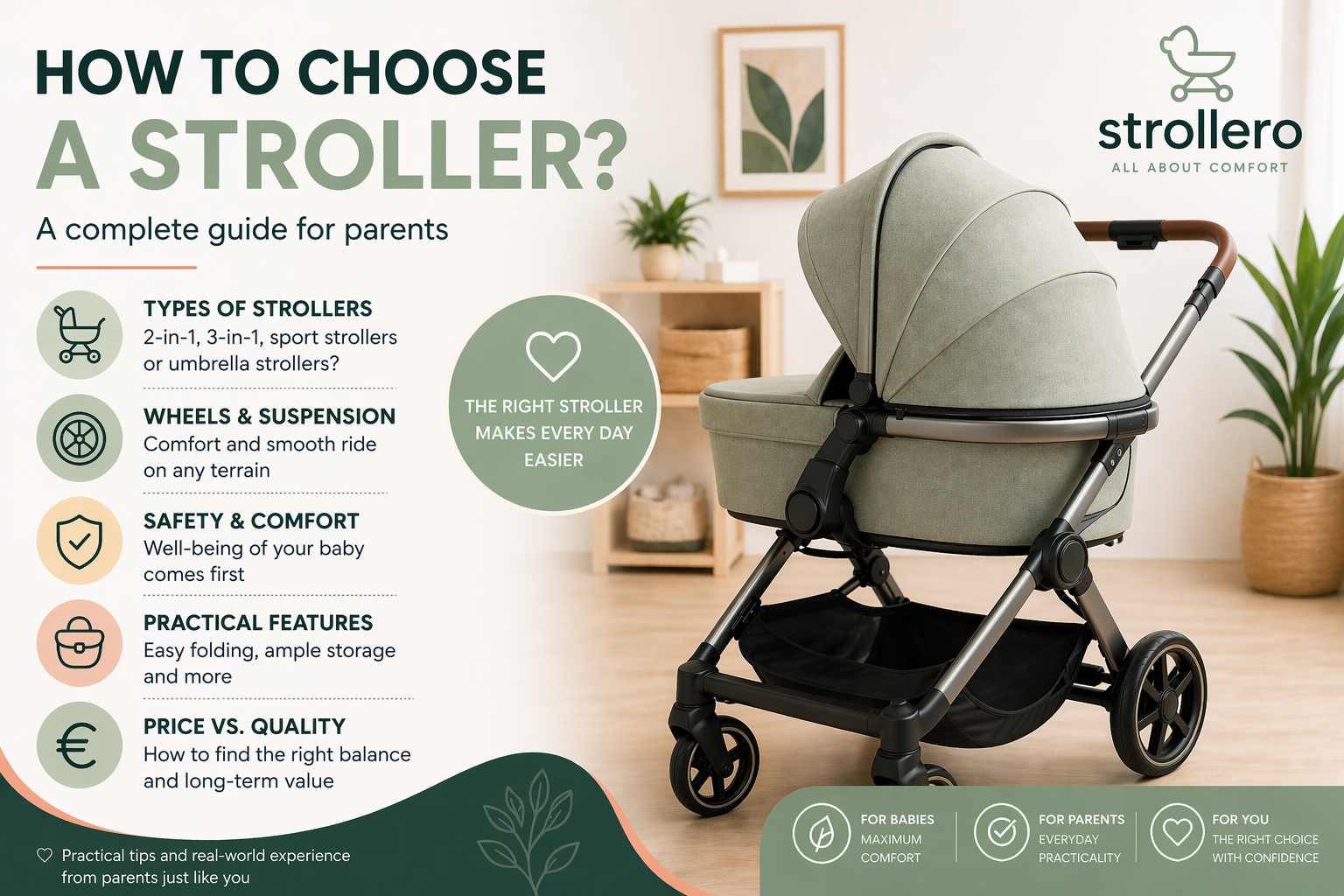
Choosing a baby stroller is not a simple decision. Parents are often faced with dozens of models, features, and recommendations that may seem similar at first glance. In reality, however, it is the small details that make the biggest difference—often only becoming apparent during everyday use.
A stroller is not just an accessory; it is something you will use almost every day. That’s why it’s worth approaching the decision practically, rather than focusing only on design or brand.
Choosing the right type of stroller
The first step is selecting the right type of stroller. Combination strollers, often referred to as 2-in-1 or 3-in-1, are among the most common choices because they cover the period from birth through toddlerhood. Their main advantage is versatility, although they tend to be heavier and bulkier.
Strollers designed for older babies who can sit independently are typically lighter and more compact, making them more suitable for everyday use, especially in urban environments. Umbrella strollers focus on maximum portability and low weight, which makes them ideal for travel, although this often comes at the cost of comfort during longer walks.
From practical experience, many parents eventually end up using more than one stroller. While a single all-in-one solution may seem ideal, a lighter secondary stroller often becomes very useful over time.
Wheels and suspension in real-world use
One of the most underestimated factors when choosing a stroller is the type of wheels and the quality of suspension. These features directly affect both the comfort of your child and how easy the stroller is to handle.
Smaller swivel wheels are ideal for city use, where maneuverability is essential. Larger inflatable wheels handle uneven terrain much better and are more suitable for rural areas or rough surfaces. If you plan to use the stroller in mixed conditions, suspension quality becomes especially important, as it helps absorb shocks and ensures a smoother ride for your baby.
It’s also important to consider maintenance. Inflatable wheels provide more comfort but require regular checks and can get punctured. Maintenance-free wheels are more practical, although slightly less comfortable.
Everyday practicality matters
Many of the most important features only become noticeable during daily use. The folded size, weight, and folding mechanism play a key role when transporting the stroller in a car or using it in smaller spaces such as elevators.
Parents often appreciate the ability to fold the stroller with one hand, especially when holding a child. Another overlooked factor is handle height. If it doesn’t suit your height, it can lead to discomfort or even back pain over time.
Whenever possible, it’s highly recommended to try the stroller in person. Specifications on paper rarely reflect real-life usability.
Comfort and safety for your child
From the child’s perspective, comfort and safety are the most important aspects. A good stroller should allow for reclining positions so your baby can sleep comfortably during walks. A large canopy provides protection from sun, wind, and weather.
The quality of the mattress and proper ventilation also play an important role. One often overlooked detail is stroller stability. Hanging a heavy bag on the handle can cause some models to tip over, which can be a safety risk.
Accessories that truly matter
Accessories may seem secondary at first, but they can significantly improve everyday use. A spacious storage basket, rain cover, or mosquito net can make a noticeable difference in comfort.
Interestingly, many parents underestimate the importance of the storage basket. Its size, accessibility, and durability often become crucial in daily situations, especially when carrying groceries or baby essentials.
Price vs. real value
The price of a stroller does not always reflect its true value. A more expensive model is not automatically the best choice, just as a cheaper one is not necessarily a bad option.
What matters most is build quality, practicality, and real user experience. An often overlooked factor is the availability of spare parts and service. This becomes important only when something goes wrong, but it can significantly impact long-term satisfaction.
Common mistakes when choosing a stroller
There are several common mistakes parents make when choosing a stroller. Many focus too much on design or brand, while overlooking practical aspects such as weight, folding mechanism, or suitability for their environment.
Another frequent issue is choosing a stroller that does not match the family’s actual lifestyle. Even a high-quality stroller can become inconvenient if it does not fit the conditions in which it is used.
Conclusion: An informed decision makes all the difference
Choosing a stroller should not be an impulsive decision. Every family has different needs, so it’s important to focus on what will work best in your everyday life.
If you are unsure, it’s worth comparing multiple options and paying attention to real-world experiences. The right stroller will make your daily routine easier, while the wrong choice will quickly become noticeable.